
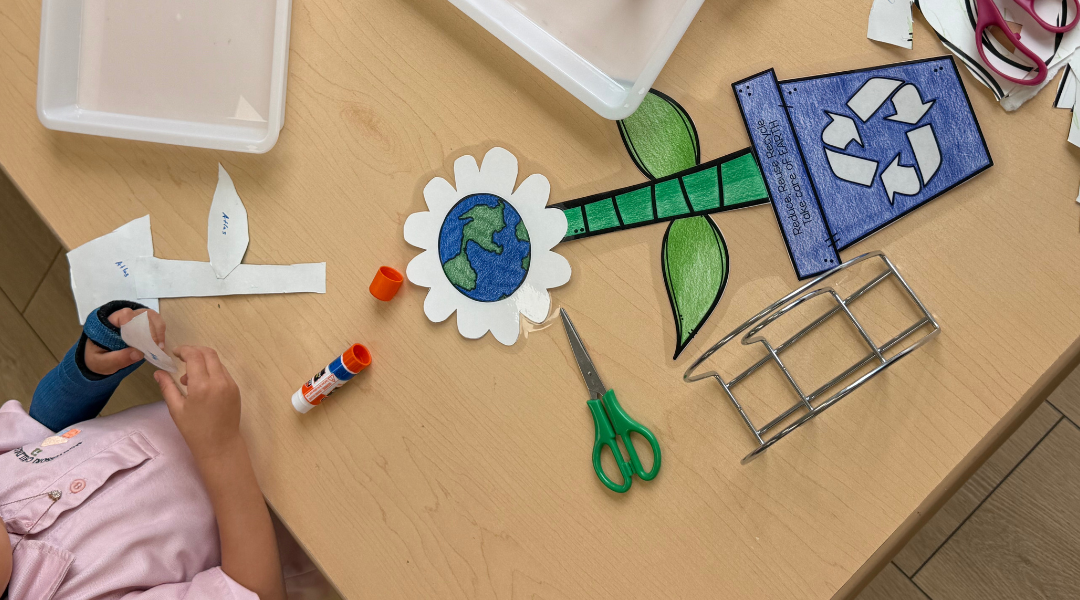
A typical morning at a Montessori preschool in Miami Lakes centers on an uninterrupted three-hour work cycle where children choose activities independently, develop concentration, and progress at their own pace. During this period, children move freely between carefully prepared materials, engage in self-directed learning, and receive individualized guidance from trained teachers who observe rather than interrupt their focus.
At Montessori Children’s House of Miami Lakes, we have seen how this extended work period transforms young learners. The three-hour cycle is not arbitrary; it allows sufficient time for children to select an activity, complete it thoroughly, and often repeat it until mastery occurs naturally.
Why the Three-Hour Work Cycle Is the Foundation of Montessori Education
Maria Montessori discovered through observation that young children need extended periods of uninterrupted time to achieve deep concentration. When given this freedom, children enter what she called “normalization”—a state of focused, purposeful engagement that builds self-discipline and joy in learning.
Children in our Miami Lakes classrooms begin their morning tentatively selecting materials, then gradually settle into profound concentration. A child might spend forty minutes pouring water between containers, perfecting their hand-eye coordination and control. Another might trace sandpaper letters repeatedly, absorbing letter shapes through tactile experience.
The three-hour work cycle supports these developmental needs:
- Time to choose work without pressure or rushing
- Opportunity to repeat activities until internal satisfaction is achieved
- Space to observe peers and learn through social modeling
- Freedom to work alone or collaborate based on the child’s needs
- Flexibility to move between gross motor activities and focused desk work
- Natural rhythm that respects each child’s energy patterns
What Happens During Each Phase of the Morning Work Cycle
The three-hour work cycle follows a natural rhythm that we observe consistently across age groups. Each phase serves a specific developmental purpose, and interrupting this sequence can prevent children from reaching deeper levels of concentration.
Phase One: Selection and Warm-Up (First 30-45 Minutes)
Children arrive and transition from home to school. They select initial activities, often choosing familiar materials that provide comfort and confidence. We see younger children gravitating toward practical life exercises like spooning, pouring, or polishing. Older children might pull out math materials they began exploring the previous day.
During this phase, the classroom hums with purposeful activity but not yet deep focus. Children are settling, observing classmates, and beginning to engage their minds.
Phase Two: Deep Work and Concentration (Middle 90 Minutes)
This period represents the heart of the Montessori method. Children have now settled into challenging work that stretches their abilities. A profound quiet often descends—not silence, but the sound of concentration. We witness four-year-olds spending thirty minutes with the pink tower, building and rebuilding, calibrating their spatial reasoning with each attempt.
Teachers give individual lessons during this time, meeting children exactly where they are developmentally. A child ready for letter sounds receives a personalized phonics lesson. Another exploring quantity receives an introduction to the golden bead material.
Phase Three: Completion and Community (Final 45 Minutes)
As the cycle concludes, children complete their chosen work and return materials to shelves. Many gravitate toward collaborative projects or social activities. We observe natural mentoring as older children help younger ones with materials they have mastered.
This phase builds the community aspect of our classroom. Children develop grace, courtesy, and consideration for shared space and materials.
| Work Cycle Phase | Duration | Primary Activities | Teacher Role |
| Selection & Warm-Up | 30-45 minutes | Transitioning, choosing familiar materials, observing peers | Greeting, observing, minimal intervention |
| Deep Work | 90 minutes | Challenging activities, focused concentration, individual lessons | Giving lessons, observing, documenting progress |
| Completion & Community | 45 minutes | Finishing work, collaborative projects, peer mentoring | Facilitating social interaction, guiding cleanup |
How the Prepared Environment Supports Independent Learning
The Montessori classroom environment is meticulously organized to enable children to work independently without constant adult direction. Every material has a designated place on accessible shelves. Children know where to find activities and where to return them when finished.
Key elements of our prepared environment include:
- Low shelves arranged by curriculum area (practical life, sensorial, language, mathematics, cultural studies)
- Child-sized furniture that allows comfortable, independent seating and standing
- One of each material available, teaching children to wait, observe, or choose alternatives
- Natural lighting and plants that create a calm, beautiful atmosphere
- Distinct work areas including individual tables, floor rugs, and group spaces
- Materials progressing from simple to complex, left to right on shelves
We have seen how this organization reduces conflict and builds executive function. When a child wants a material another is using, they develop patience and planning skills. They might observe the peer using the material, learning through watching. They might choose preparatory work that builds skills needed for the desired activity.
For families in Miami Lakes—where many parents work in industries like healthcare at nearby Palmetto General Hospital or business sectors in the Miami Lakes Town Center—the independence children develop during the work cycle translates to confident, self-directed learners who thrive in structured environments.
The Teacher’s Role as Observer and Guide
Montessori teachers function differently than traditional preschool instructors. Rather than leading group activities or directing all classroom movement, we observe carefully and intervene purposefully. The three-hour work cycle gives us time to understand each child’s developmental trajectory and readiness for new challenges.
Our responsibilities during the work cycle:
- Observe each child to identify sensitive periods for specific learning
- Prepare individualized lessons based on readiness, not age or grade level
- Maintain the environment, ensuring materials are complete and orderly
- Model grace, courtesy, and respect in all interactions
- Protect children’s concentration by limiting unnecessary interruptions
- Document progress and insights for family communication
- Facilitate conflict resolution while encouraging peer problem-solving
Our most important work often involves knowing when not to intervene. A child struggling to button a dressing frame is building persistence. Swooping in to help robs them of the satisfaction of eventual success. We stand ready to assist when frustration becomes unproductive, but we honor the struggle that precedes mastery.
Real-World Skills Children Develop During the Work Cycle
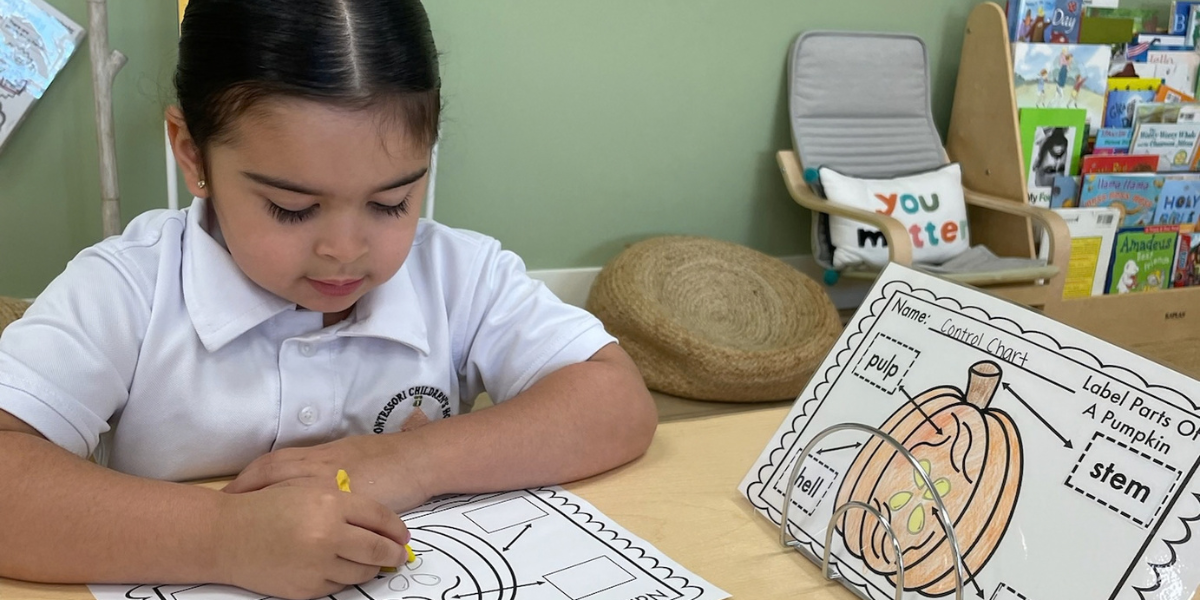
The three-hour work period cultivates competencies that extend far beyond academic preparation. Parents often ask what their children gain from choosing their own activities for such extended periods. We have observed measurable growth in executive function, social-emotional regulation, and intrinsic motivation.
Practical skills we witness developing:
- Time management: Children learn to gauge how long activities take and plan accordingly
- Decision-making: Daily practice choosing work builds confidence in making good choices
- Focus and attention: Extended concentration periods strengthen this critical cognitive skill
- Self-correction: Materials with built-in error control teach children to assess their own work
- Social collaboration: Mixed-age classrooms create natural mentoring relationships
- Respect for community: Shared materials and space teach consideration for others
- Intrinsic motivation: Learning driven by internal curiosity rather than external rewards
These capabilities serve children throughout their educational journey and adult life. A child who learns to focus deeply at age four brings that skill to elementary homework sessions, high school projects, and eventually professional work.
Local Connection: Many Miami Lakes families appreciate how Montessori principles align with the community’s values of independence and achievement. Children who attend our program develop the focus and self-direction that prepare them for success in Miami-Dade County’s competitive educational landscape.
How We Handle Common Parent Concerns About the Work Cycle
Parents new to Montessori education sometimes worry that children will waste time if given too much freedom. We understand these concerns and have evidence from decades of Montessori practice worldwide showing that children naturally choose productive work when the environment is properly prepared.
What If My Child Only Chooses Easy Activities?
We observe this pattern occasionally during a child’s first weeks. They select familiar, comfortable materials while adjusting to the environment. As they build confidence and observe peers engaging with challenging work, curiosity naturally draws them to more complex activities. Teachers also gently invite children to try new materials based on observed readiness.
Will My Child Learn What They Need for Kindergarten?
Absolutely. The Montessori curriculum is comprehensive and academically rigorous. Children master phonics, mathematics, geography, biology, and other subjects through hands-on materials. Because learning is individualized, advanced children progress beyond typical kindergarten standards while those needing more time receive it without stigma. For example, our graduates enter elementary school as confident readers, capable mathematicians, and enthusiastic learners.
Frequently Asked Questions
How do you handle children who struggle to focus during the three-hour work cycle?
We approach each child as an individual, recognizing that concentration builds gradually. For children new to extended work periods, we start with shorter expectations and incrementally extend their focus time. We also examine whether the child needs more physical activity, is choosing appropriately challenging work, or requires additional support. Most children develop strong focus within weeks when the environment meets their developmental needs.
Can children eat snacks during the work cycle?
Yes, we maintain a prepared snack area where children can serve themselves when hungry. This teaches self-regulation, nutrition awareness, and practical skills like pouring, serving, and cleaning up. Children learn to recognize their body’s signals and respond appropriately rather than eating only when adults dictate snack time. This approach respects their autonomy and builds lifelong healthy habits.
What happens if a child finishes work quickly and seems bored?
A child who consistently completes work quickly likely needs greater challenge. Our teachers observe and offer more complex materials or extensions of familiar activities. The mixed-age classroom provides natural scaffolding—younger children see challenging work they can aspire to, while older children can mentor and deepen understanding through teaching. Boredom usually signals a mismatch between the child’s abilities and available work.
How does the three-hour work cycle differ from traditional preschool schedules?
Traditional preschools often structure mornings with multiple short activities: circle time, then craft, then snack, then outdoor play. This fragmented approach interrupts concentration just as children engage deeply. The Montessori work cycle provides uninterrupted time, allowing children to achieve flow states. Transitions, snacks, and group activities happen organically within the cycle rather than being externally imposed on all children simultaneously.
Is the work cycle the same for toddlers and preschool-age children?
The principle remains consistent, but implementation varies by developmental stage. Our toddler program features a shorter work cycle appropriate to their developing attention spans. Preschool-age children benefit from the full three-hour period. Primary-age children in our elementary program engage in even more extended work cycles, building stamina for deep, sustained intellectual effort that serves them throughout their academic careers.
Experience the Montessori Difference in Miami Lakes
Understanding the three-hour work cycle helps families appreciate how Montessori education cultivates independence, focus, and love of learning. At Montessori Children’s House of Miami Lakes, we have seen countless children blossom when given the freedom and structure this approach provides.
Our dedicated teachers create prepared environments where your child can thrive academically, socially, and emotionally. We celebrate each family’s uniqueness and partner with you to help your child reach their fullest potential. The skills children develop during our morning work cycle—concentration, decision-making, persistence, and intrinsic motivation—serve them throughout life.
We invite you to observe a morning work cycle in action. See how children as young as three work purposefully with materials, develop genuine concentration, and experience the satisfaction of self-directed achievement. Visit our campus and discover why families throughout Miami Lakes choose Montessori education for their children.
Ready to learn more about our program? Contact Montessori Children’s House of Miami Lakes today at (305) 823-5632 or visit us at 6381 Miami Lakeway N, Miami Lakes, FL 33014. Schedule a tour and see firsthand how the three-hour work cycle transforms young learners into confident, capable, enthusiastic students.