Moving from Montessori preschool to an elementary microschool is an exciting milestone, but it also brings new questions for many families. While children who have attended Montessori preschool already understand independence, responsibility, and hands-on learning, the elementary years introduce deeper academic exploration, collaborative research, and greater ownership of the learning process.
For many families in Miami Lakes, this transition feels less like starting over and more like taking the next natural step. Children continue learning within a familiar Montessori philosophy while developing new skills that prepare them for long-term academic success.
At Montessori Children’s House of Miami Lakes, educators have guided many students through this transition over the years. One of the most common observations is that children who enter an authentic Montessori elementary environment often adapt more smoothly than parents expect because many of the classroom routines, expectations, and learning habits were already established during preschool.
Understanding what changes—and what remains consistent—helps families support their children with confidence.
What Defines an Elementary Microschool in the Montessori Context
An elementary microschool extends Montessori education beyond preschool by serving students in grades one through six within intentionally small learning communities. Rather than teaching every child at the same pace, authentic Montessori elementary programs allow students to progress according to their individual readiness while working alongside classmates of different ages.
Most Montessori elementary microschools enroll approximately 10 to 15 students per classroom, creating an environment where guides can observe each child closely and tailor lessons to individual interests and developmental needs.
Core characteristics of a Montessori elementary microschool in Miami Lakes include:
- Mixed-age classrooms. Students typically learn alongside peers spanning three grade levels, creating opportunities for mentorship, leadership, and collaborative learning.
- Three-hour uninterrupted work cycles. Instead of changing subjects every 30 or 45 minutes, children have extended periods to concentrate deeply on meaningful work.
- Concrete-to-abstract learning. Mathematical, scientific, and language concepts are first explored using hands-on Montessori materials before students transition to abstract thinking.
- Low student-to-teacher ratios. Guides continuously observe student progress and introduce new lessons when each child is developmentally ready.
- Integrated curriculum. Rather than treating subjects as isolated blocks, lessons naturally connect science, history, geography, mathematics, literature, and the arts.
For children coming from Montessori preschool, many classroom routines already feel familiar. They understand how to choose meaningful work, care for classroom materials, and respect the learning environment. The elementary microschool simply expands those skills into increasingly sophisticated academic experiences.
How the Elementary Experience Differs from Preschool Montessori
While Montessori preschool emphasizes foundational skills, practical life activities, and sensorial learning, elementary education introduces a significant shift toward reasoning, imagination, and intellectual exploration.
Children begin asking more complex questions—not simply “What is this?” but “Why does it work?” and “How is it connected to everything else?”
This developmental shift influences every aspect of the classroom.
| Preschool Montessori | Elementary Montessori Microschool |
| Practical life and sensorial exploration | Abstract reasoning and critical thinking |
| Early literacy and numeracy | Research, writing, and interdisciplinary projects |
| Individual discovery | Collaborative investigations and peer learning |
| Short learning activities | Multi-day and multi-week projects |
| Teacher presents materials | Guide facilitates inquiry and independent research |
| Observation-based assessment | Portfolios, mastery demonstrations, and self-reflection |
Parents are often surprised by how much responsibility elementary students assume. Rather than completing isolated assignments, children may spend several weeks investigating a topic that integrates science, geography, writing, mathematics, and art.
For example, a student studying ecosystems might research endangered animals, create scientific illustrations, calculate habitat statistics, write a research report, and present findings to classmates. Instead of viewing these as separate subjects, Montessori connects them into one meaningful learning experience.
Educators at Montessori Children’s House of Miami Lakes frequently observe that this integrated approach keeps children highly engaged because learning feels purposeful rather than fragmented.
The Imagination Stage Awakens
Dr. Maria Montessori identified ages six through twelve as a unique stage of development when imagination becomes one of a child’s greatest learning tools. During these years, children naturally seek to understand how people, nature, science, history, and culture connect.
Rather than simply memorizing information, they want to investigate ideas, ask thoughtful questions, and discover relationships between concepts.
Authentic Montessori elementary programs nurture this curiosity through Cosmic Education, a distinctive Montessori approach that presents the world as an interconnected whole. Lessons explore the story of the universe, the formation of Earth, the evolution of life, human civilizations, mathematics, language, and scientific discovery as parts of one larger narrative.
Experienced Montessori guides often notice that this stage brings a dramatic increase in curiosity. Questions become longer, conversations become deeper, and children begin making connections independently. A lesson about volcanoes may naturally lead to discussions about geography, ecosystems, ancient civilizations, and environmental science.
Rather than providing every answer immediately, guides encourage children to investigate, experiment, and discover solutions through research and collaboration.
This shift helps students develop critical thinking, resilience, and a genuine love of learning that extends far beyond elementary school.
Preparing Your Child for the Transition
A successful transition depends on more than academic readiness. Children also benefit from emotional confidence, growing independence, and enthusiasm about entering a new learning community.
Families often ask whether their child is “ready” for elementary Montessori. While every child develops differently, educators generally look for a combination of academic, social, and emotional indicators rather than focusing on one specific milestone.
Academic Readiness
Many children entering an elementary microschool are beginning to demonstrate:
- Comfortable phonetic reading and growing reading fluency.
- Understanding of addition, subtraction, and place value using Montessori materials.
- The ability to write multiple connected sentences.
- Curiosity about researching topics independently.
- Persistence when working through multi-step activities.
Rather than expecting perfection, Montessori educators look for children who enjoy learning and are willing to work through challenges with increasing independence.
Social and Emotional Readiness
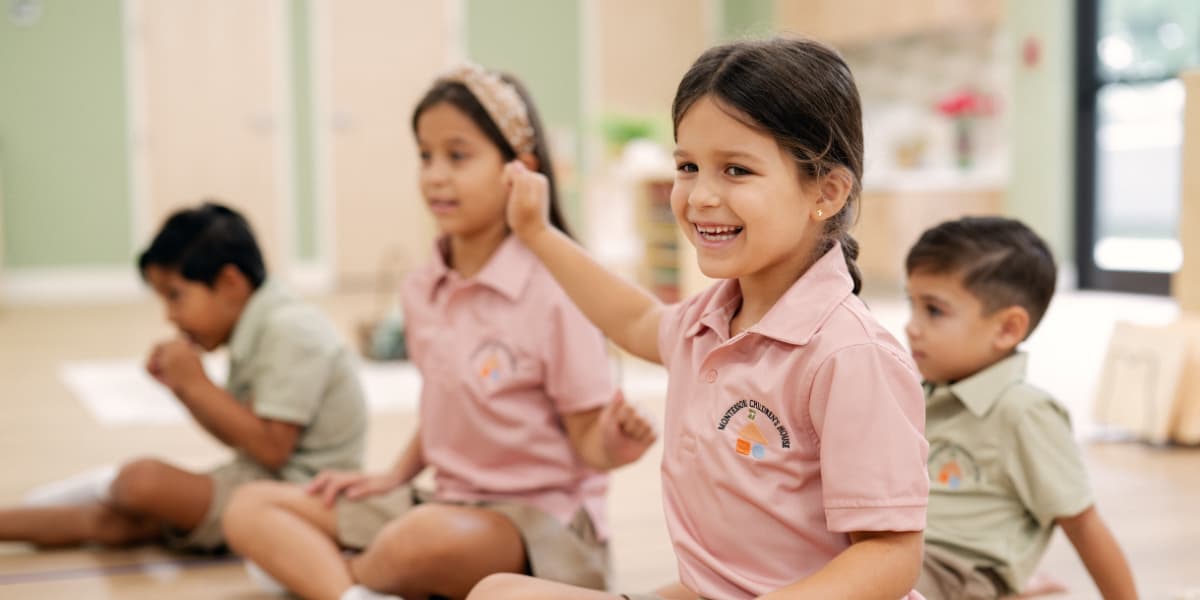
Equally important are the habits children have developed during preschool.
Parents can ask themselves:
- Does the child work respectfully alongside others?
- Can they resolve small disagreements with guidance?
- Are they comfortable asking thoughtful questions?
- Can they remain focused for 20 to 30 minutes without constant reminders?
- Do they enjoy taking responsibility for classroom jobs or helping others?
Children who demonstrate these qualities often transition comfortably because they already possess many of the executive functioning skills elementary learning requires.
One observation frequently shared by Montessori guides is that parents sometimes worry more than their children do. While adults naturally focus on academic expectations, children are often excited by the opportunity to work with older classmates, explore new materials, and enjoy greater independence.
Many Miami Lakes families choose to visit elementary classrooms during the spring before enrollment. Watching older students engaged in uninterrupted work cycles, collaborative discussions, and independent research helps younger children visualize what comes next and often transforms uncertainty into excitement.
Selecting the Right Elementary Microschool Environment
Not all programs claiming Montessori affiliation provide authentic elementary experiences. Parents should evaluate teacher credentials, material quality, and adherence to core principles during the selection process.
Essential evaluation criteria:
- AMI or AMS-credentialed guides: Verify that lead teachers hold recognized Montessori elementary certification, not just early childhood credentials.
- Complete Montessori materials: The classroom should contain geometry cabinets, grammar boxes, timeline of life, and other specialized elementary tools.
- Authentic work cycles: Observe whether students work uninterrupted for extended periods or face frequent transitions and group lessons.
- Outdoor and community access: Elementary children benefit from field research, gardening, and engagement with the local Miami community.
- Multi-year continuity: Children should remain with the same guide and peer group for multiple years, building deep relationships.
Questions to ask during school visits:
- How do you support children transitioning from preschool Montessori programs?
- What does a typical three-hour work cycle look like for first-year elementary students?
- How do you assess and report progress without traditional grades?
- What opportunities exist for going out (field research) into the Miami Lakes community?
- How do you maintain mixed-age groupings as enrollment fluctuates?
At Montessori Children’s House, guides with specialized elementary training create environments where children build on their preschool foundation while embracing new intellectual challenges. The program celebrates each child’s uniqueness within a spiritually enriched setting that fosters independence and critical thinking.
Helping Your Child Thrive in Elementary Montessori
The transition period typically spans 6-8 weeks as children adjust to new expectations, peer dynamics, and academic challenges. Parents play a crucial role by maintaining consistent routines and communicating openly with guides.
During elementary transitions, teachers often notice that children who were highly confident in preschool become mentally tired during the first few weeks. This isn’t usually a sign that something is wrong. Instead, it reflects the increased concentration required for longer work cycles, larger research projects, and greater independence. As routines become familiar, most children gradually regain their confidence.
When to Seek Additional Support
Most adjustment challenges resolve naturally, but persistent difficulty warrants conversation with your child’s guide. Warning signs include sustained anxiety about school, inability to engage with materials after two months, or social isolation from the peer group.
Miami Lakes families benefit from the close-knit microschool community where teachers notice individual needs quickly. The low student-to-teacher ratio allows for responsive intervention before small concerns become larger obstacles.
Frequently Asked Questions
How long does it take for preschool Montessori students to adjust to elementary microschool?
Most children adapt within 6-8 weeks as they become comfortable with longer work cycles and increased academic expectations. Children with strong preschool Montessori foundations typically transition smoothly because the core philosophy, materials, and classroom rhythms remain consistent even as content complexity increases.
What if my child attended traditional preschool rather than Montessori?
Children from traditional settings can absolutely succeed in elementary microschools, though they may need additional time to develop self-direction and independent work habits. Guides provide extra scaffolding in choosing work, managing time, and collaborating with peers during the first semester until these skills become internalized.
Do elementary microschools prepare students for traditional middle school or high school?
Elementary microschool graduates typically transition successfully to various educational settings because they develop strong research skills, self-motivation, and executive function. Many families report that their children adapt quickly to traditional formats while maintaining the love of learning and intellectual curiosity fostered during the elementary years.
How do microschools handle students working at different academic levels?
Mixed-age classrooms are designed for this exact scenario. Guides present lessons to small groups or individuals based on readiness rather than age. Advanced students access more complex materials while others consolidate foundational concepts. This eliminates the pressure of keeping pace with arbitrary grade-level expectations.
What role do parents play in elementary Montessori education?
Parents serve as supportive partners who reinforce independence at home, provide resources for research projects, and communicate openly with guides about their child’s development. Unlike preschool, where parents often observe in-class, elementary families typically engage through conferences, parent education workshops, and community events that celebrate student work.
Make the Transition With Confidence
Moving from preschool to elementary represents a significant milestone in your child’s educational journey. When you choose an environment that honors Montessori principles through small class sizes, individualized attention, and authentic materials, your child can build on their early foundation while embracing new intellectual challenges.
Montessori Children’s House of Miami Lakes provides the continuity and expertise families need during this transition. Our dedicated leadership team helps each child overcome challenges and achieve their academic and personal goals within a secure, natural, and positive setting. We nurture the whole child, instilling a lifelong love for learning while equipping them with skills and knowledge to thrive.
Our scientifically based approach emphasizes independence, freedom within limits, and respect for your child’s natural development. The elementary program builds directly on preschool experiences, creating seamless progression as your child matures into a confident, capable learner.
Ready to explore how our elementary program can serve your family?
Contact Montessori Children’s House of Miami Lakes today to schedule a visit and see our students engaged in authentic Montessori work. Call us at (305) 823-5632 or visit our campus at 6381 Miami Lakeway N, Miami Lakes, FL 33014 to discover how we celebrate your child’s uniqueness while preparing them for academic success.