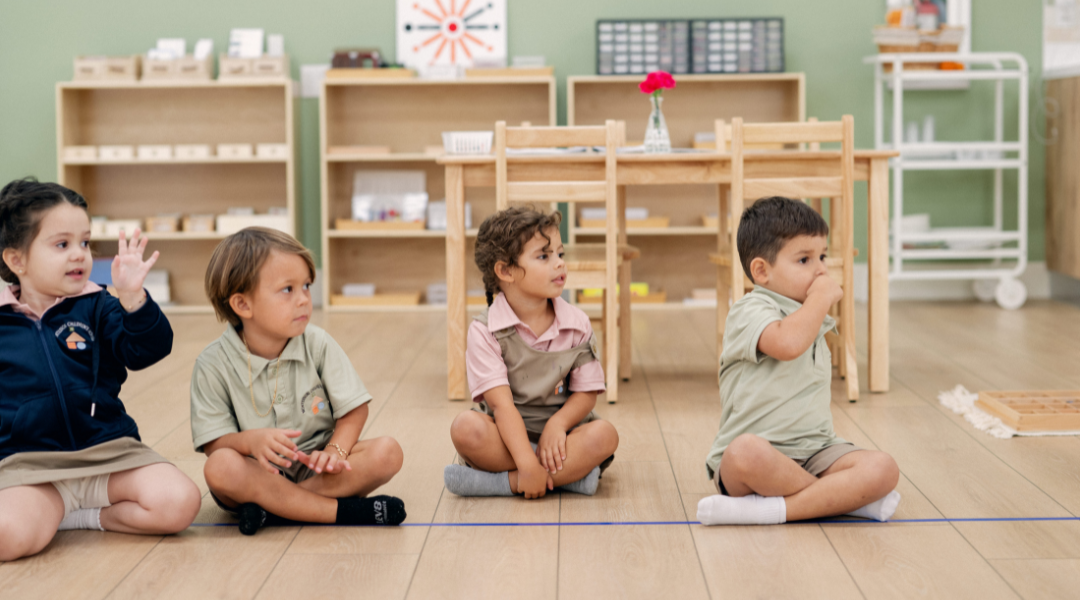
When families in Miami Lakes start looking for an early learning program, they’re rarely just looking for childcare. They’re asking a bigger question: what kind of person will my child become? The benefits of Montessori education reach well beyond the preschool years, shaping how children think, focus, and relate to the world long after they’ve moved on to elementary school and beyond.
At Montessori Children’s House of Miami Lakes, we’ve seen these outcomes take root in real children, one carefully guided step at a time. Below, we break down what the Montessori approach actually builds, why it lasts, and how our community here in Miami Lakes brings it to life.
What the Research Actually Shows
The benefits of Montessori education aren’t just anecdotal. In October 2025, researchers led by Dr. Angeline Lillard at the University of Virginia published the first national randomized controlled trial of public Montessori preschool in the Proceedings of the National Academy of Sciences. Because children were admitted by random lottery, the study offers unusually strong evidence of Montessori’s real impact rather than the effect of family background.
The findings were clear: by the end of kindergarten, children who attended Montessori preschool showed significantly stronger outcomes in reading, short-term memory, executive function, and social understanding than their non-Montessori peers. The study followed 588 children across 24 public Montessori programs nationwide, making it the largest study of its kind to date.
A 2023 systematic review of Montessori research, also published in a peer-reviewed journal, reached a similar conclusion: Montessori education was associated with positive effects on both academic and non-academic outcomes, including measurable gains in executive function and creativity. In other words, the long-term benefits parents hope for are backed by the science. The sections below explain what those benefits look like day to day.
Independence That Lasts a Lifetime
One of the clearest benefits of Montessori education is genuine independence. In a Montessori classroom, children choose their own work, manage their own materials, and complete tasks at their own pace within clear, consistent limits. This is what Dr. Maria Montessori called “freedom within limits,” and it’s at the heart of our scientifically based approach.
The result isn’t a child who simply follows directions well. It’s a child who learns to direct themselves. That capacity for self-management, knowing how to start, sustain, and finish meaningful work, is exactly what serves students later in life, from middle-school study habits to adult careers.
Deep Focus and Concentration
Montessori environments are designed to protect long, uninterrupted work periods. Instead of switching activities every few minutes, children settle into tasks and develop sustained concentration. Over time, this builds an attention span that’s increasingly rare and increasingly valuable.
This kind of focus is a foundation skill. A child who can concentrate deeply on a hands-on math material today is building the same mental muscle they’ll use to read a chapter, solve a complex problem, or follow a multi-step project years from now.
A Real, Durable Love of Learning
Because Montessori children pursue work that genuinely interests them, learning stops feeling like something done to them and starts feeling like something they own. That shift matters. Children who associate learning with curiosity and accomplishment, rather than pressure, tend to stay motivated learners well into their school years.
At Montessori Children’s House, we nurture the whole child precisely so this love of learning has room to grow. We aren’t only teaching letters and numbers; we’re helping each child discover that figuring things out feels good.
Social Confidence and Respect for Others
Montessori classrooms typically group children of mixed ages, which mirrors how the real world works far better than single-age rooms. Younger children learn by watching older peers; older children build leadership and empathy by helping the younger ones. Everyone practices patience, cooperation, and respect.
This social structure produces children who are comfortable in a community, capable of resolving small conflicts, and confident speaking up. In a warm, secure setting like ours, that confidence is built on a foundation of feeling genuinely seen and valued.
Strong Problem-Solving and Critical Thinking
Montessori materials are self-correcting by design. A child working with them often discovers and fixes their own mistakes without an adult stepping in. That experience teaches something powerful: errors aren’t failures; they’re information. Children learn to assess, adjust, and try again, the exact loop that underpins critical thinking and resilience.
Practical Life Skills That Transfer Everywhere
A distinctive feature of Montessori classrooms is the emphasis on practical life activities, the everyday tasks adults often overlook. Children pour, button, sweep, fasten, prepare snacks, and care for their environment. These aren’t busywork. Each activity refines coordination, builds order and sequencing, and teaches a child that they are capable of contributing meaningfully to the world around them.
The transfer is direct and lasting. A four-year-old who learns to carefully carry a tray of materials is practicing the same control, patience, and care they’ll later apply to handwriting, laboratory work, or any task requiring precision. Just as importantly, mastering real tasks gives children a quiet, grounded confidence that no worksheet can replicate. They know they can do hard things because they already have.
The Power of the Prepared Environment
Montessori classrooms are not arranged by accident. Every shelf, material, and activity is intentionally placed at a child’s height and within their reach, inviting independent exploration. This “prepared environment” is one of the method’s most important and most underappreciated benefits, because it quietly does much of the teaching.
When a child can access what they need without waiting for an adult, they learn to trust their own judgment and take ownership of their day. The classroom becomes a place of possibility rather than permission.
At Montessori Children’s House of Miami Lakes, our classrooms are thoughtfully prepared each day so that every child walks into a space designed to help them succeed on their own terms, a small but profound message that says, “You belong here, and you are capable.”
Emotional Regulation and Inner Discipline
Among the most valuable long-term benefits of Montessori education is something that rarely appears on a report card: inner discipline. Because children are trusted with real choices and real responsibility, they gradually develop the ability to manage their own emotions and impulses. Rather than relying on external rewards and punishments, Montessori children learn to find motivation and calm from within.
This emotional regulation pays dividends for the rest of a child’s life. Teenagers and adults who can stay composed under pressure, delay gratification, and persevere through frustration almost always trace those habits back to early years of practice. In our nurturing Miami Lakes community, we guide children gently through these moments, helping them build the self-awareness and resilience that strong character requires.
Why These Benefits Last
The reason Montessori outcomes endure comes down to how they’re built. Skills like independence, focus, and self-motivation aren’t memorized for a test and forgotten. They’re formed through years of daily practice during the sensitive early-childhood window when the brain is most receptive to forming habits and dispositions. What a child practices at three and four becomes simply who they are at ten and fifteen.
The Montessori Difference in Miami Lakes
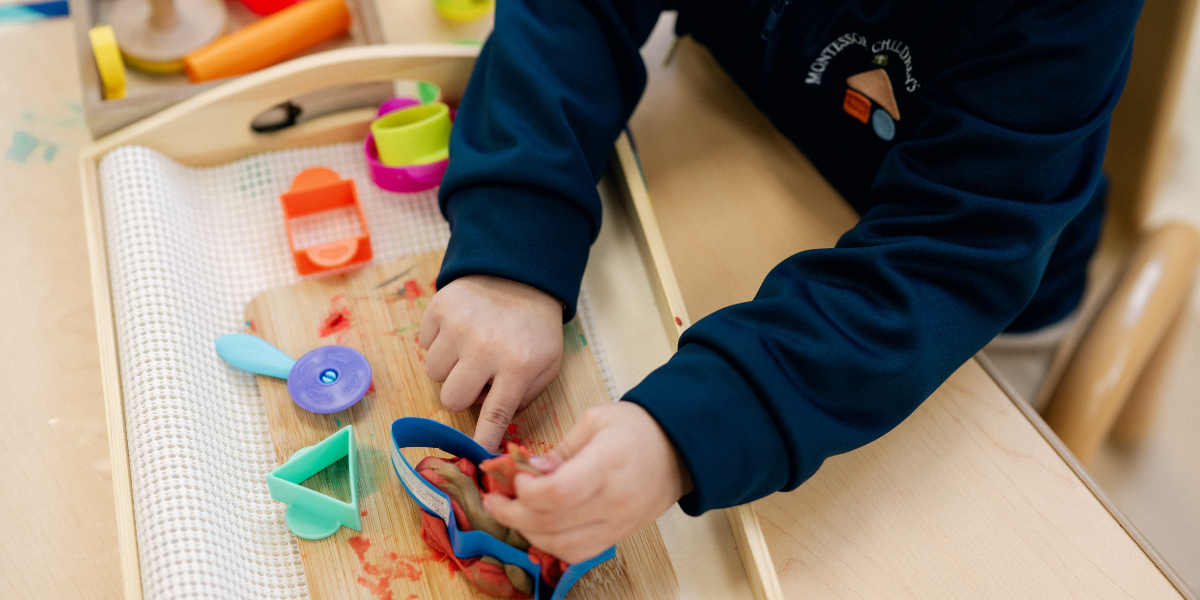
Families across Miami Lakes, Hialeah, Miami Gardens, and the surrounding northwest Miami-Dade communities choose us because we pair an authentic Montessori philosophy with a spiritually enriched, high-quality learning environment. We celebrate the uniqueness of every child and family, and our dedicated leadership walks alongside children as they overcome challenges and reach both academic and personal goals.
Located on Miami Lakeway N in the heart of Miami Lakes, our school is a familiar and convenient choice for local families, just minutes from the town center, Main Street, and the surrounding residential neighborhoods. Parents tell us they appreciate having a trusted, full Montessori program close to home, so the short drive to school becomes part of a calm, predictable daily rhythm rather than a cross-county commute.
Our approach respects each child’s natural psychological, physical, and social development, and it shows in the calm, purposeful, joyful atmosphere of our classrooms. For Miami Lakes parents who want their child to thrive, not just attend, that difference is everything.
Frequently Asked Questions
What are the long-term benefits of Montessori education?
Montessori education builds independence, self-discipline, and a durable love of learning that carries into later schooling and adulthood. Children develop strong concentration, problem-solving skills, and social confidence by directing their own work within a carefully prepared environment.
At what age should a child start Montessori?
Many Montessori programs begin around age two to three, when children are in a sensitive period for language, movement, and order. Starting early gives a child more time to benefit from the multi-year, self-paced structure that defines the Montessori method.
Is Montessori good for every child?
Montessori suits a wide range of learners because it adapts to each child’s pace rather than forcing one timeline. Children who thrive on hands-on exploration and independence often respond especially well, and skilled guides help every child find their footing.
How do Montessori teachers support my child?
Montessori teachers, called guides, observe each child closely and introduce materials at the right moment for that child’s development. Rather than lecturing the whole class, they offer individualized guidance that helps each child build skills, confidence, and independence.
How much does Montessori school cost in Miami Lakes?
Montessori tuition in the Miami Lakes area varies by program length, age group, and schedule. The best way to get accurate pricing is to call Montessori Children’s House of Miami Lakes at (305) 823-5632, where the team can walk you through current tuition and enrollment options. Taking an in-person tour is highly recommended to fully evaluate the school’s processes, review required enrollment documents, and understand the complete pricing structure firsthand.
Does Montessori prepare children for kindergarten and beyond?
Montessori prepares children well for kindergarten and elementary school by building reading, math, focus, and independence early. Because children develop self-management and a love of learning, they often transition into later schooling as confident, capable, and motivated students.
Visit Montessori Children’s House of Miami Lakes
If you’re ready to see what a true Montessori education can do for your child, we’d love to welcome you. Schedule a tour to experience our secure, natural, and positive setting for yourself, walk through our prepared classrooms, and meet the team helping Miami Lakes children build confidence and a lifelong love of learning.
Montessori Children’s House of Miami Lakes
Address: 6381 Miami Lakeway N, Miami Lakes, FL
Call (305) 823-5632 today to schedule your visit.