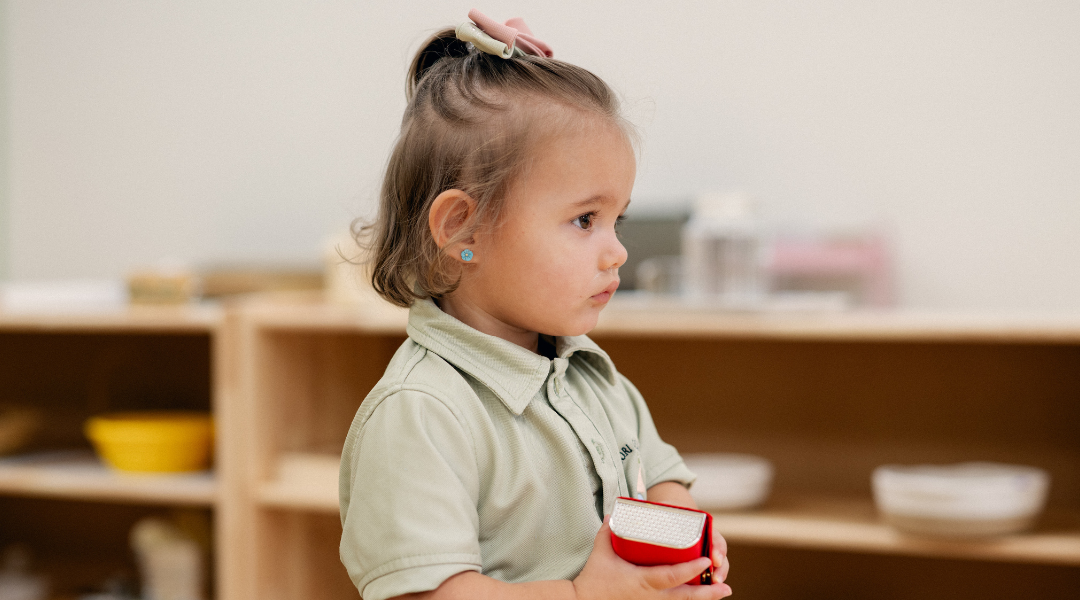
If your child clings to your leg at birthday parties, takes a while to warm up to new people, or prefers one close friend over a noisy crowd, you’ve probably wondered how they’ll do in school. Will they be pushed too hard? Overlooked? Forced to “come out of their shell” before they’re ready? For parents of shy or introverted children in Miami Lakes, choosing the right early learning environment can feel especially high-stakes.
The good news: Montessori education is often a remarkably good fit for quiet, sensitive, and introverted children. At Montessori Children’s House of Miami Lakes, we’ve watched many reserved children blossom, not by being changed, but by being respected for exactly who they are. Here’s why the Montessori approach tends to work so well for these children, and what to look for as a parent.
First, Shy and Introverted Aren’t the Same Thing
It’s worth separating two ideas that often get lumped together. Shyness usually involves some anxiety or hesitation in social situations; a child may want to join in but feel nervous doing so. Introversion is different: it’s a temperament, not a fear. Introverted children simply recharge through quieter, lower-stimulation activities and may prefer depth over breadth in their friendships and interests.
Both types of children share something important: they tend to do poorly in loud, high-pressure, one-size-fits-all environments, and they tend to thrive when given time, space, and respect. That’s precisely what a Montessori classroom is designed to offer.
Work at Your Own Pace, No Spotlight Required
In a traditional classroom, much of the day is teacher-directed and group-based: everyone does the same lesson at the same time, often with hands raised and answers called out. For a shy child, that constant low-level pressure to perform in front of peers can be exhausting and intimidating.
The Montessori model works differently. Children move through individualized, self-paced work, choosing activities and settling into them for long stretches. A quiet child can dive deeply into a task that fascinates them without ever being put on the spot. This self-directed structure, central to our Montessori curriculum, lets introverted children show what they know through their work rather than through performance.
Guides Who Notice the Quiet Child
One of the biggest fears parents of shy children have is that their child will simply fade into the background, never disruptive, so never noticed. In a Montessori environment, that risk is much lower.
Montessori teachers act as guides rather than lecturers. They spend their days observing each child closely, tracking where a child is developmentally and what they’re ready for next. A quiet child isn’t lost in a sea of thirty raised hands; they’re seen as an individual. Our guides know how to gently invite a reserved child forward without overwhelming them, building trust before expecting participation.
A Calm, Prepared Environment That Feels Safe
Sensitive and introverted children are often more affected by their surroundings than their more boisterous peers. A chaotic, overstimulating room can put them on edge; a calm, orderly one helps them relax and engage.
Montessori classrooms are intentionally peaceful. Our prepared environment is arranged with order, beauty, and accessibility in mind, with materials at child height and a predictable rhythm to the day.
For a shy child, that predictability is enormously reassuring: they know what to expect, where things belong, and that no one is going to spring a surprise on them. From that secure base, they feel safe enough to explore and take small social risks.
Social Interaction Without the Pressure
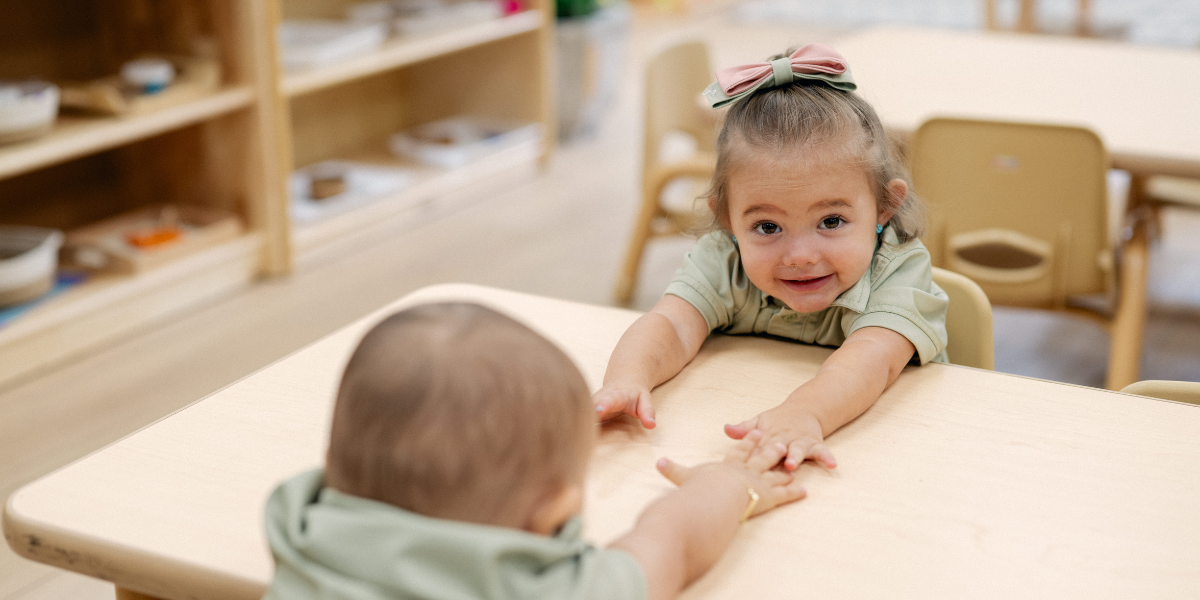
Here’s a common misconception: that Montessori, with its emphasis on independent work, might leave a child isolated. In practice, the opposite tends to be true, especially for introverts.
Because Montessori classrooms group children of mixed ages, social interaction happens organically and on a human scale. Instead of large-group activities where a shy child might shut down, children collaborate in pairs or small clusters, an older child showing a younger one how a material works, or two friends quietly problem-solving side by side.
Introverted children can engage in the small, low-pressure ways that suit them, gradually expanding their comfort zone at their own pace rather than being thrown into the deep end.
Confidence That’s Built, Not Forced
The goal was never to turn a quiet child into an extrovert. It’s to help them become a confident version of themselves. Montessori does this by stacking up small, real successes: a child masters a practical life task, completes a work cycle, helps a younger classmate. Each success is genuine, and genuine successes are what build authentic, durable confidence.
Over time, many parents notice their once-hesitant child speaking up more, trying new things, and carrying themselves with a quiet self-assurance, not because anyone pressured them, but because they were given the time and respect to grow into it. You can read more about how our approach is unique and why it resonates with so many families.
Why Quiet Kids Thrive at Montessori Children’s House of Miami Lakes
Quiet children rarely struggle because of who they are. They struggle when an environment asks them to be louder, faster, or more outgoing than their nature allows. What sets our school apart for these families is simple: we never treat reserve as a problem to fix.
A child who observes before joining, who thinks before speaking, who needs a moment to feel settled, that child is welcomed exactly as they come, and given the room to unfold in their own time.
That patience is woven into our Christ-centered approach, where compassion and respect for each child shape how our guides teach every day. For a shy or introverted child, it means school becomes a place they can trust rather than one they have to brace for. Whether your little one is just starting in our preschool program or growing into our elementary microschool, we meet them where they are, and help them go further than they thought they could.
Frequently Asked Questions
Is Montessori good for shy or introverted children?
Montessori is often an excellent fit for shy and introverted children because it lets them work at their own pace, choose their own activities, and join group interaction when they feel ready rather than on demand. The calm, predictable environment helps quiet children feel safe enough to gradually build confidence on their own terms.
Will a shy child get lost in a Montessori classroom?
A shy child is unlikely to get lost in a well-run Montessori classroom because teachers, known as guides, observe each child closely and offer individualized attention. Rather than being overlooked in a large group lesson, a quiet child is seen, understood, and gently supported one step at a time.
Does Montessori force children to be social?
Montessori does not force children to be social or perform on cue. Social interaction happens naturally through mixed-age work and collaboration, so introverted children can engage in small, comfortable ways instead of being pushed into large-group activities before they are ready.
How can I tell if Montessori is right for my quiet child?
The best way to tell if Montessori suits your quiet child is to visit a classroom and watch how the environment feels. Scheduling a tour at Montessori Children’s House of Miami Lakes lets you see the calm atmosphere firsthand and talk with our guides about your child’s temperament and needs.
See It for Yourself
The best way to know whether our environment is right for your child is to experience it. We’d love to welcome you and your little one to schedule a tour, walk through our calm, prepared classrooms, meet our guides, and see how a Montessori setting could help your shy or introverted child feel safe, seen, and confident.
Montessori Children’s House of Miami Lakes
Address: 6381 Miami Lakeway N, Miami Lakes, FL 33014
Schedule a tour today, or call (305) 823-5632 to learn more.